Beyond Vibe Coding.Toward Vibe Delivery.
I’m Brian Matthews. After air traffic control and twenty years of enterprise Salesforce delivery, I’m exploring how AI can keep people, decisions, and execution working from one shared picture.

Every team has its window.
Delivery needs the radar.
In air traffic control, I learned to hold the immediate work and the wider picture at once. I bring that same focus to enterprise delivery.
The story behind the radar →Explore what belongs in the shared picture
People
Delivery starts with people agreeing on the outcome and who owns each decision.
Explore Signal →One request.
Six jobs to do.
Explore the full framework →Illustrative Salesforce scenario · not a customer case study
A sales manager requests review before large discounts are approved.
Capture the request
- input
- A sales manager asks for review before large discounts are approved.
- action
- Record the request, origin, intended outcome, and open questions.
- output
- Structured intent with a traceable source.
Why it matters A traceable source keeps the original need visible.
Plan against the current system
- input
- Captured intent and the existing Salesforce approval process.
- action
- Inspect current rules, stakeholders, dependencies, and agreed review criteria.
- output
- A grounded plan with explicit assumptions and acceptance criteria.
Why it matters Explicit assumptions prevent a plan from drifting away from reality.
Execute with traceability
- input
- The agreed plan and acceptance criteria.
- action
- Implement and validate changes while linking work back to the request.
- output
- Changes and checks tied to the original intent.
Why it matters Linked work makes it possible to explain why a change exists.
Preserve the decision
- input
- Decisions about review ownership, thresholds, and exceptions.
- action
- Record the rationale and relevant context for future teams.
- output
- A durable decision record that can be found and reused.
Why it matters Reusable decisions spare the next team the same discovery work.
Resolve the conflict
- input
- Another team is changing the same customer approval workflow.
- action
- Surface conflicting assumptions and agree the dependency before release.
- output
- A shared decision and coordinated delivery plan.
Why it matters Shared dependencies prevent separate teams from delivering incompatible changes.
Prove the outcome
- input
- Validated changes and the original acceptance criteria.
- action
- Link the released behavior, checks, decisions, and request.
- output
- A traceable record of what shipped and why.
Why it matters Evidence closes the gap between saying done and showing the outcome.
A teaching sequence, not a rigid architecture. Nexus and Relay support work across stages.
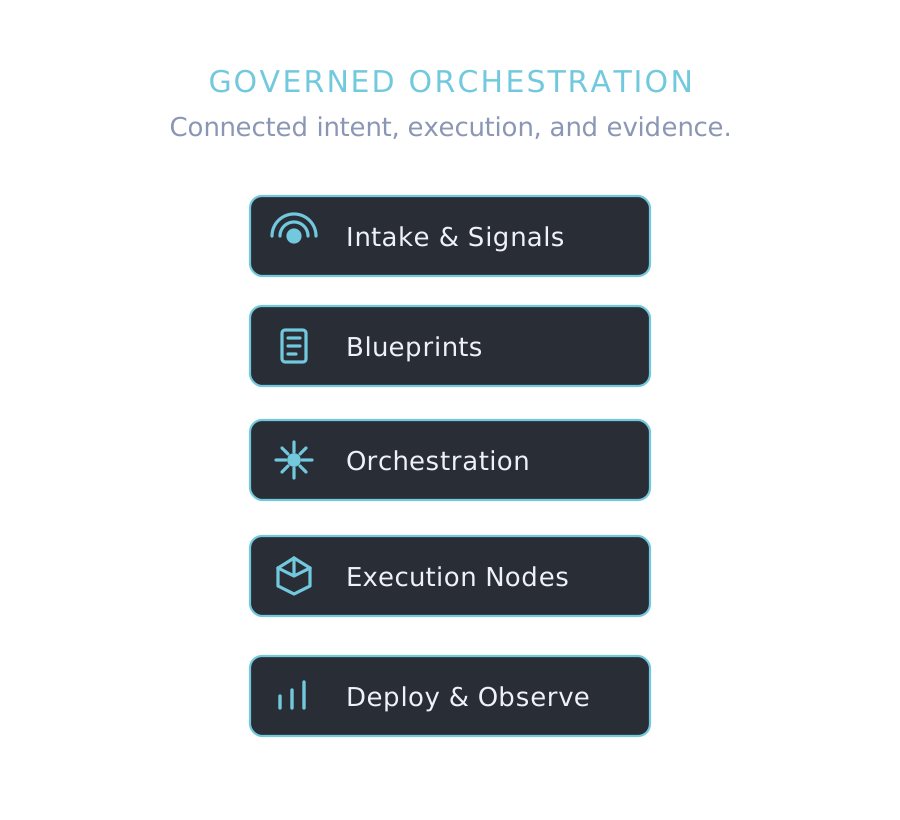
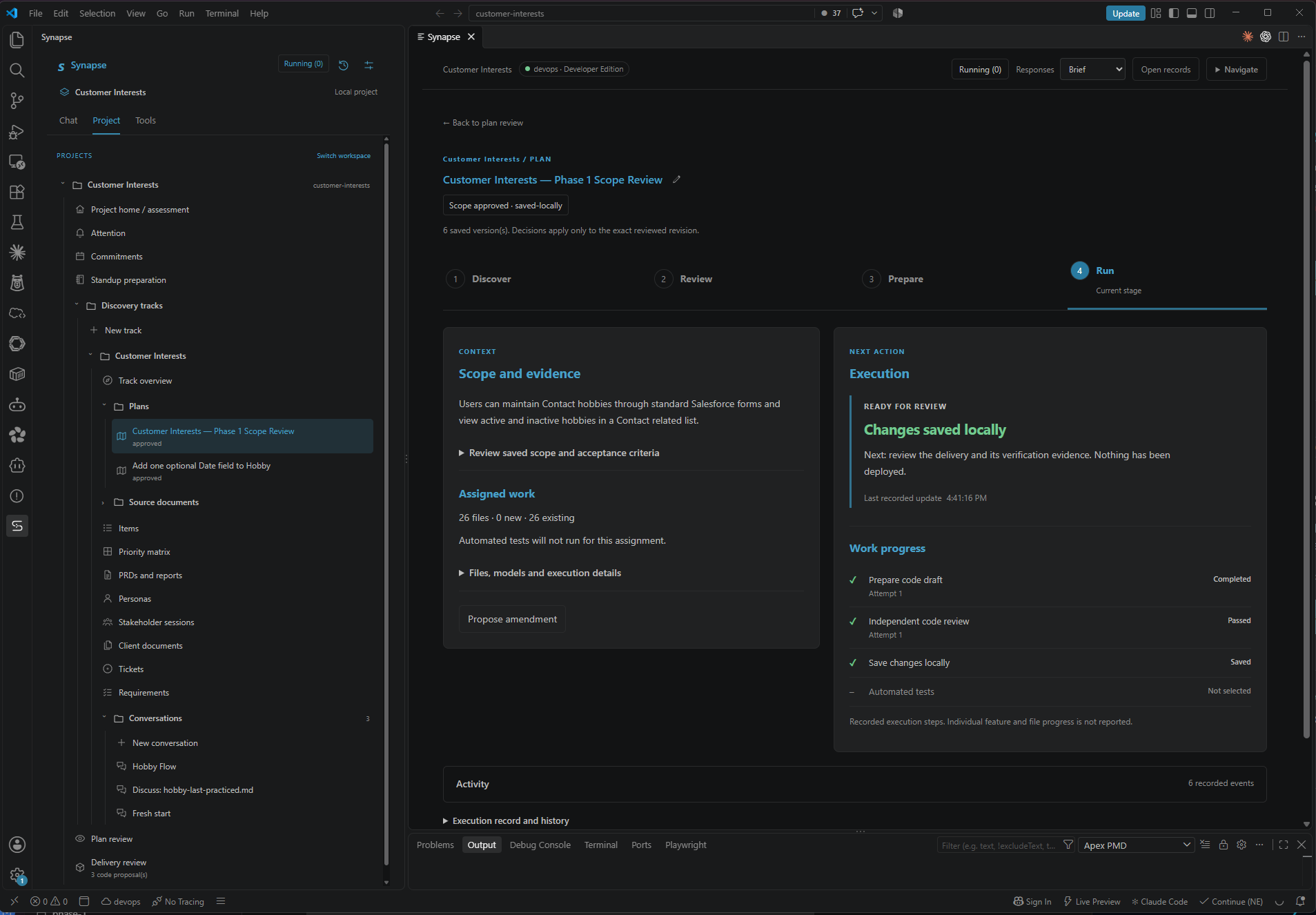
Synapse
The cloud coordination platform for teams and AI agents.
Synapse keeps intent, decisions, context, and execution connected so delivery can move from one shared picture.
Cloud platform · In development
Synapse Solo
The open-source personal workspace.
Synapse Solo brings priorities, decisions, projects, and AI-assisted work into one connected picture—without requiring a team-scale platform.
Open-source project
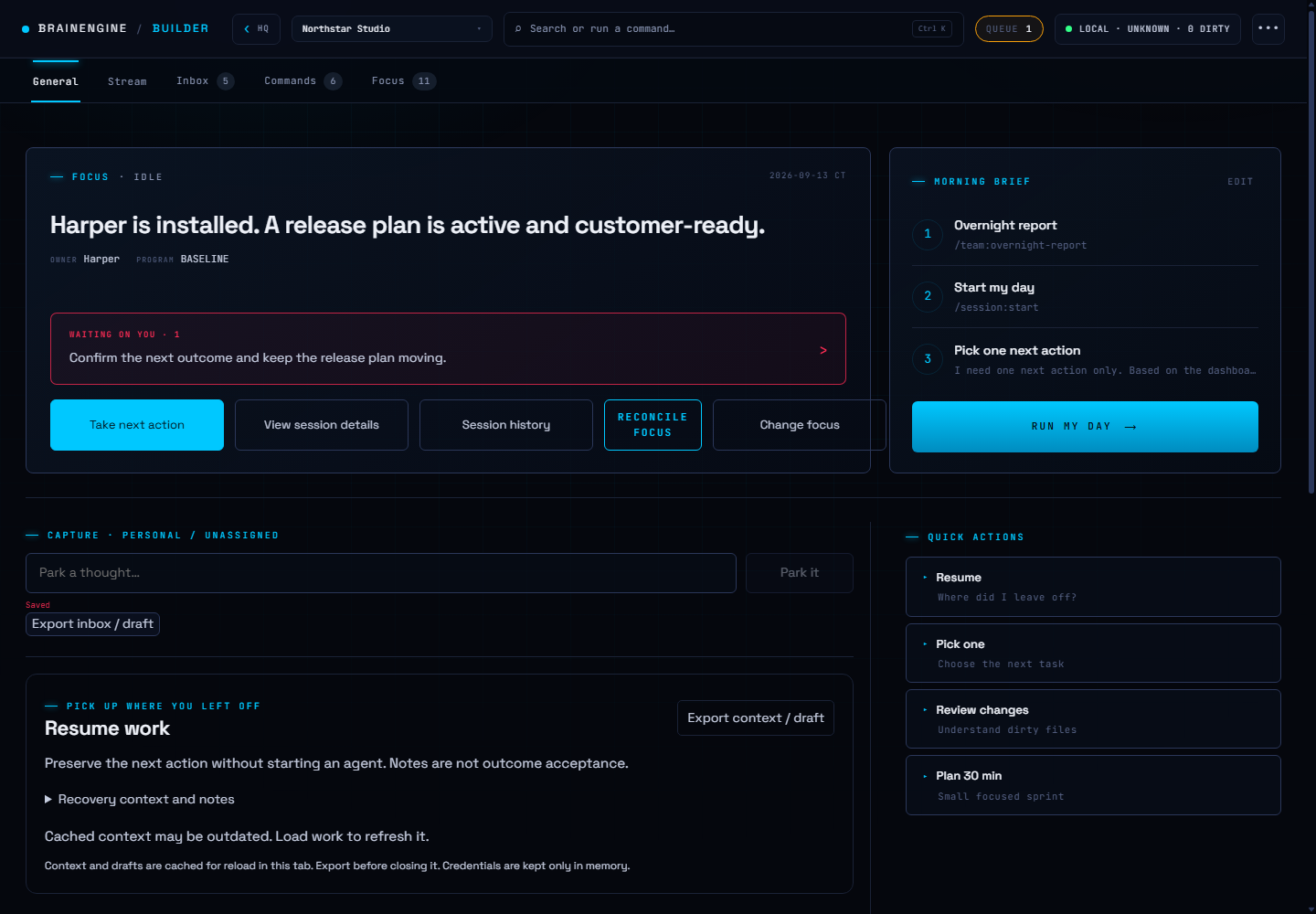
Command Center
The system behind my projects, life, and AI work.
My Command Center is a living demonstration of the coordination principles behind Synapse: making priorities visible, preserving context, and clarifying the next meaningful action.
Start with the delivery problem.
Writing on the connections between intent, decisions, and execution.
All writing →Why Vibe Coding Isn't Enough
Coding is just a task. Delivery is the mission, and that's where AI still has to prove itself.
The Enterprise Intelligence Layer
The missing layer between intent and outcomes, and why every serious AI delivery effort ends up building one.
Organizational Memory: Context vs. Knowledge
Why context disappears while knowledge compounds, and how to tell which one you're actually losing.
AI Teammates Need a Chief of Staff
The AI Chief of Staff is the coordination layer that turns a pile of capable agents into a team that actually works.